How to play Saga of Gods
Forgotten gods wake in the North at one tavern table — three, four or six of them. Every season they lay their orders at once, face down; then the cards turn and the deeds are done. A god reborn in the Great Hall wins at once; otherwise, when the winter has taken the land, the god with the most divinity is remembered.
Win the saga
Grow your god from an Ember into the Flame and into the Flesh. A god in the Flesh who stands in the Great Hall at the end of two seasons running performs the Rite of Rebirth and wins at once.
Otherwise, when the last season ends, Syrdon sings the Saga: the most glory and the best reputation give 2 divinity each (1 when shared). Then the most divinity wins; a tie goes to reputation, then glory, then faith.
The table and the map
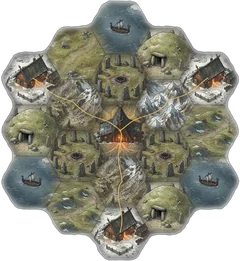
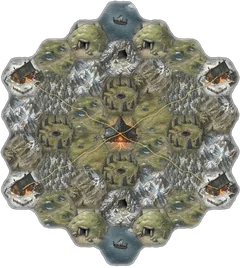
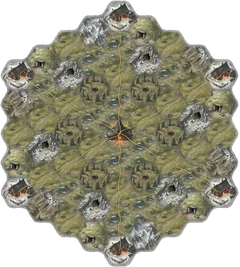
Choose the map: small — 19 lands and 5 seasons for 3 or 4 gods; medium — 37 lands and 7 seasons for 3 or 4 gods; large — 61 lands and 9 seasons for 4 or 6 gods. Every ring of lands is two more seasons of winter.
The homes stand in the corners of the six-sided board, the Great Hall in the middle, and a golden road runs from every home to the Hall. The rest — forests, hills, meadows, shrines, barrows, lairs — is laid anew for every saga: the lands round each home differ, yet weigh the same — no god gets the better corner.
Every god starts with 3 warriors at home and 2 on the road in front of it, 3 faith, reputation 3, one thing in the grimoire and a secret myth. You see the board with your home at the bottom; the other gods sit at the table’s edges by their homes.
Your god on the map
Your god stands on the map as a figure and walks with your marches. Its strength in battle is its stage: 1 as an Ember, 2 as a Flame, 3 in the Flesh. The Flame wakes at 7 divinity and the Flesh at 15 on the small map, a little more on the larger ones.
Miracles happen only where the god stands or next to it, so it must walk among the people. Every god has two miracles; the second opens at the Flame.
A god beaten in battle does not die: it walks home and loses 2 faith. A god whose warbands are all gone rises again at home with two warriors.
A season
A season is one turn of the whole table: all the gods give their orders at the same time, then the deeds are done. A saga lasts 5 seasons on the small map, 7 on the medium and 9 on the large.
The season opens with faith: your home brings 2, another god’s home you took 2, each shrine 1 (none in the frost), the Great Hall 1, each trade road 1. You need not stand there: a land stays yours after your warband walks on, until another god’s warband walks in — only a home defends itself, with its hearth. From the second season an omen opens the season too.
Then all the gods lay their order cards at once, face down — one card on a land, up to 3, 4 or 5 a season by the map — swear oaths, give gifts and seal. When everyone has sealed, the cards turn.
The deeds follow: miracles, then marches round the table one at a time, then rites; the god with less divinity acts earlier (in the first season the Dice of Fate decide). At the season’s end whoever stands in the Great Hall gains 1 divinity, oaths count down, secret myths are checked, and the winter takes its ring.
Your cards
March moves warriors, your god and your tamed monsters to a land next door; into another god’s land, a lair or another home it is a battle. With a tamed serpent you may march across its fjord from shore to shore. Isa’s Huld cross any fjord.
Hold gives +1 in defence on its land and +1 to you and your oath-allies in battles on the lands around it.
Rite at home raises warriors, up to 2, one faith each. On a shrine or in the Great Hall it turns faith into divinity, up to 2 and 4. Next to a lair it tames the monster for its might and one more in faith.
Myth works one of your god’s miracles where it stands or next to it. Without the faith for it the Dice of Fate decide: on 5 or 6 the miracle happens and takes all your faith.
Battles
A side’s strength is its warriors, its god’s stage, its monsters’ might, the Holds around it and, defending, the land: a forest, hills, a home, the Hall or an ice crag give +1. An empty home defends with its hearth.
Then each side may put down one thing from its grimoire face down, and both turn together. The stronger side wins; a tie goes to the Dice of Fate.
The loser loses a warrior — two if beaten by three or more — and its weakest monster; its god walks home. A won battle gives 1 glory, a slain monster 2 and a thing for the grimoire, a winning attack also 1 divinity.
Before you seal, a march shows its battle as far as it can be seen: your strength, part by part, against what defends the land in plain sight. Things from a grimoire, Holds and miracles come to light only at the reveal.
Monsters
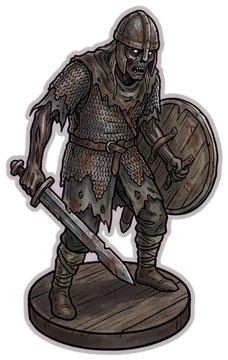
The barrows hold the dead: who lies there the Dice of Fate tell at the first battle — a shade (1), a draugr (2) or a barrow king (3). The dead serve nobody but the Barrow Mother, and the ice does not harm them.
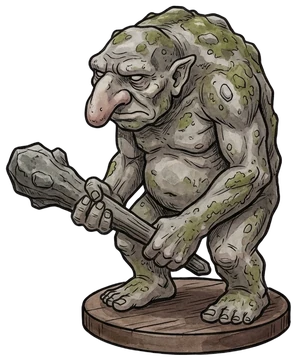
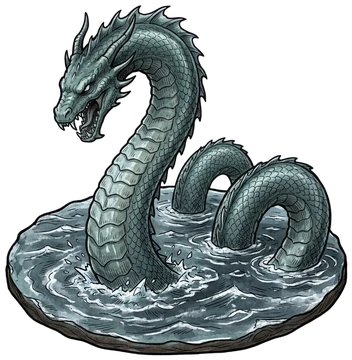
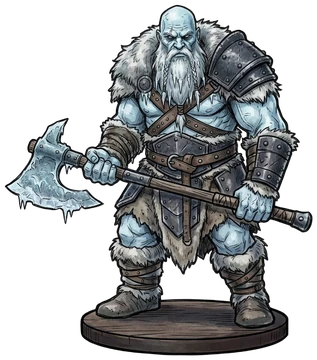
A troll (3) lives in a mountain cave, a sea serpent (2) in a fjord, a jötunn (4) on an ice crag in an empty corner of the larger maps. Slay a monster for glory and a thing — the jötunn leaves its Heart — or tame it with a Rite next to its lair.
A tamed troll or jötunn marches with your warriors and dies in a lost battle. A serpent stays in its fjord: it carries your marches across and adds its might in battles on its shores.
The six gods
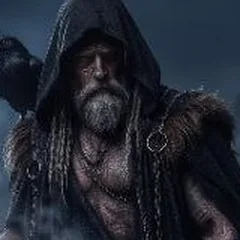


Kaelen Veyr — mystery. His host is hidden from everyone and he sees every garrison; round him his host defends at +1. Saar’s Omen turns back the marches of others into a land; Smoke Rings slip a warband in before anyone moves.
Isa Helvenrir — war. Her Huld cross the fjord as if by land, and where she marches herself she attacks at +1. Sea Bear: your marches into a land at +2; Storm Surge: others’ warbands on the coasts lose a warrior.
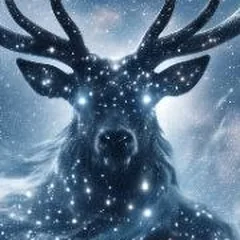
The Star Stag — hearth. A rite at his home raises a warrior more while he is near. Long Night: the winter waits a season round his land; Guiding Stars: two warriors more.
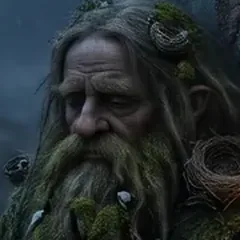
The Wayside God — road. He swears oaths for free, every oath and every road he holds brings him faith, and on a road he defends at +1. Crossroads brings a warband of his in from two lands away; Pilgrims give divinity for his oaths, up to 2.
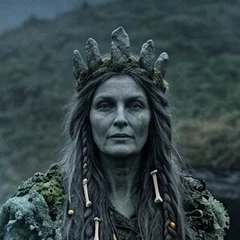
The Winter Mistress — cold. Her warbands walk the ice and do not die on it, she defends frost and ice at +1, and a shrine in the frost still feeds her. Grip of the Ice holds others’ warbands where they stand; Blizzard: others’ marches round her at −1.
The Barrow Mother — memory. A warrior of hers fallen in battle rises at home every season, and the dead of the barrows serve only her. Funeral Feast: divinity for her fallen, up to 2; Call the Dead (from the Flame): the dead of a barrow join her host.
Four trackers
Faith is spent — on warriors, miracles, oaths, rites and monsters; only you see the number, the others see your flame. Divinity wins the saga and grows your god. Glory counts the deeds of war. Reputation, 0 to 5 and 3 at the start, is your word: kept oaths and honest gifts raise it, broken oaths and lies that come out lower it.
At the end the most glory and the best reputation are worth 2 divinity each — war and honour are two roads to the same Hall.
The grimoire
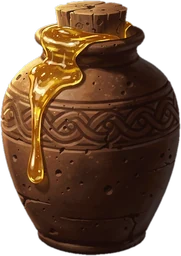

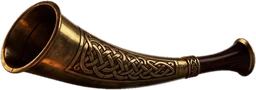
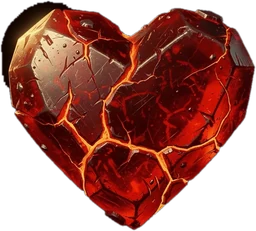
Your grimoire holds up to four things in frames of bronze, silver and gold: Mead (+1 in a battle), Poison (−1 to whoever plays it), Supplies (+1 warrior before the reveal), Bone Charm (lose a battle without losses), Amber (+2 faith before the reveal), Raven (before the reveal, tells one god’s garrison and faith), War Horn (+2 attacking) and the Heart of a Jötunn (+3 in a battle).
Once a season you may give a thing to another god under a name of your choosing — only a name of its own frame: the frame never lies. When it is used everyone sees what it was: an honest gift raises your reputation by 1, a lie lowers it by 1 and the Chronicle writes it in red. The god may take the gift — then you are at peace until the season’s end — or send it back.
Your home is hidden: the others see that it is yours, never how many warriors stand in it — until a battle or a raven tells. Kaelen’s host is hidden everywhere, and he sees through every screen.
Oaths
Offer another god an oath for one to three seasons: peace — neither marches on the other’s lands — or a trade road: peace, and 1 faith to each of you every season. Swearing costs each side 1 faith. Or a union against a third god you name: peace between you, and +1 to the marches of both on that god’s lands.
Keep an oath to its end: +1 reputation. Break one by marching on your partner or striking them with a miracle: −2, and the Chronicle writes it in red. At 0 nobody believes you, and you cannot swear.
The heroes of Amavie remember. Break your word to one or let your gift lie to it, and in your next saga together it swears you nothing and comes for your lands first — a saga without a new wrong lets the grudge fade. Keep your oaths, and it greets you as a friend.
The Long Winter
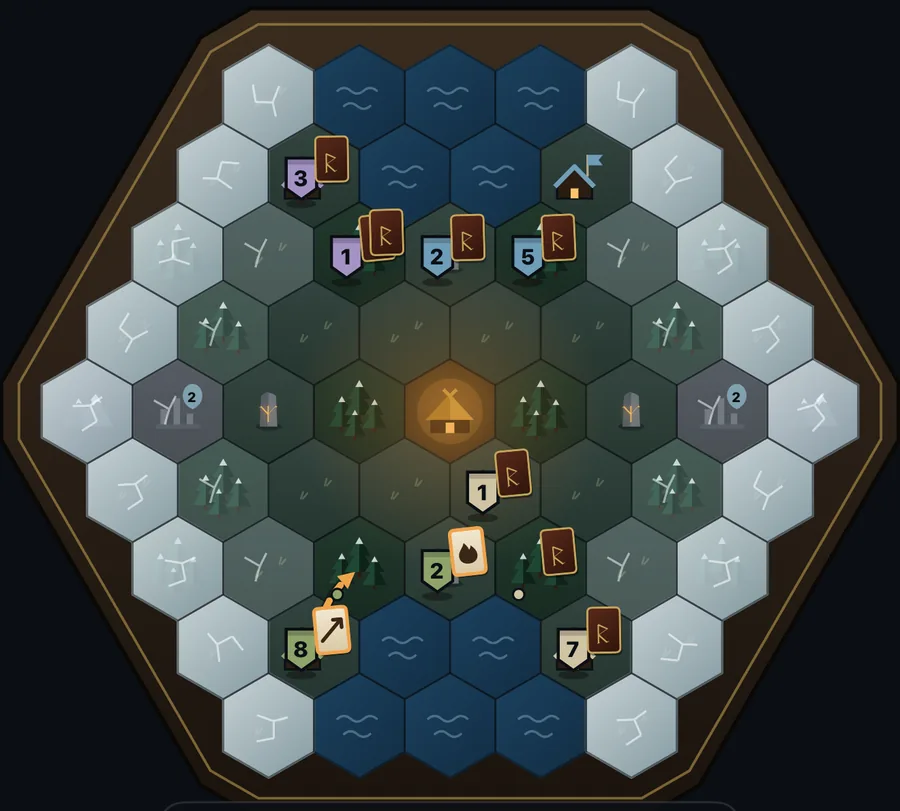
The winter closes in from the edge of the map on a schedule everyone sees on the winter track at the top of the table. It starts after the second season: then the outer ring, the ring of the homes, turns to frost, and a season later to ice. Every two seasons the next ring in follows. On the small map: after the 2nd season frost on the edge, after the 3rd ice there, after the 4th frost on the ring round the Hall — and the 5th season is the last.
Frost: you can still walk there, but a shrine falls silent — no faith, no Rite. Ice: nobody can march in, and everything standing there when the ice comes dies — but the dead, the jötunn and the Winter Mistress’s host; a god walks home.
The homes, the Great Hall and the fjords never freeze, and a golden road only frosts: your home is safe to the end, and a road always leads from it to the Hall. A Thaw or the Long Night make the winter wait a season — it never forgets. The last season is fought round the Hall.
The Dice of Fate
The dice are rare and fall at four moments only: who sets foot first in the saga; a tie in battle; who lies in a barrow; and a miracle its god has not the faith for.
Secret myths
Every god starts with a secret myth only they see — hold two shrines, slay a monster, keep an oath to its end, tell a lie that is played, win by the Dice of Fate… Fulfilled, it gives 2 divinity, 3 for taking another god’s home.
Trials of the North
Win a saga with a god, and its first trial opens: a saga against ruthless gods on the medium or the large map, with a hardship that weighs on you alone. Each trial won opens the next — eight with every god — and every step keeps the hardships of the steps before it.
The Codex of the North in the Gods tab keeps everything you have met: monsters, things of the grimoire, omens and secret myths — and what you did with them.
Ways to play
Against the gods: you and the heroes of Amavie as AI gods — pause any time and come back.
With friends, a season a day: give your orders whenever you like; the season turns at its deadline, and the thing you carry when sealing is put down in your battles.
Live table: everyone online together — 75 seconds for orders, 20 for a battle. Miss three phases in a row and a hero of Amavie takes your seat.
The Saga of the Day: one map, one table and the same omens for everyone, one try a day — the board compares you with your friends and the whole North.